
We’ve all been there. Feeling confident.
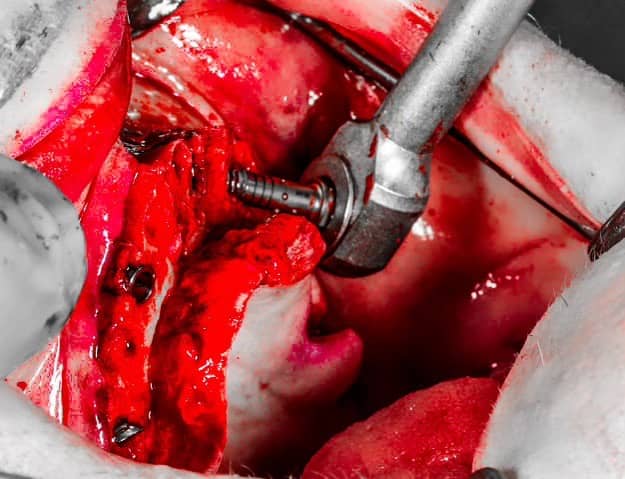
Implant #4 in – Torque 45 N-cm.
Implant #7 in – Torque 50 N-cm.
Implant #10 in – Torque 50 N-cm.
Implant #13…in…? Torque 15 N-cm?!?
What now? We do technically have a composite torque of >120 N-cm. So, by definition, we are ok to load right? Right??? But, can we? Or more precisely, should we load a distal implant with a torque of only 15 N-cm??
This is always a conundrum.
Here’s the treatment path I walk down when I find myself in this situation.
What to Do with a Low Torque Implant
Goals: Composite torque of 120 N-cm or greater and ~30 N-cm of torque per individual implant.
In the event of an individual low torque implant (less than 30 N-cm) – I will consider the following:
1. Remove the low torque implant and replace the implant to achieve a higher torque at the same site.
There are many techniques you can employ to accomplish this (topics for another article) – but you get the point.
2. Place an additional implant distal to the low torque implant that achieves a higher torque.
This could be a palatal root implant, a pterygoid implant, or a short implant distal to the mandibular foramen. Ultimately, you are achieving a higher, more stable torque on the most distal implant.
This allows for one of two things:
A) You can now confidently load the lower torque implant since you have adequate distal support.
B) Or, you can bury the low torque implant and still load since you have an additional distal implant for prosthetic support.
3. Add additional implant/s (wherever possible) to improve the overall composite torque.
In this scenario, you may not actually be able to add an implant distal to the low torque implant – but you may be able to add an additional implant somewhere anterior to it.
This is less ideal than option #2 – but more ideal than nothing.
You aren’t solving the low torque distal implant problem. BUT, you are at least achieving a higher composite torque. This is still beneficial if you are going to immediately load with a low torque implant as part of your AOX configuration.
4. Delayed Load
While not the best option, if you truly cannot find any means to achieve adequate torque – especially on a distal implant – the final option would be to bury all implants and perform a delayed load. The low implant torque doesn’t have near the negative effect in this scenario and tends to heal predictably.
The next time you find yourself with a less than ideal, low torque full-arch implant (especially a distal implant) – consider the 4 solutions above.
As you walk yourself down this path, you might just find an answer to your predicament.
Matthew Krieger DMD
“All failure is failure to adapt, all success is successful adaptation.”
Max McKeown
Q & A with Dr. K
“As an OMFS, did you feel well trained out of residency to perform AOX surgery?” |
Yes and no.
As an OMFS, I felt well trained in all the building blocks. I was comfortable with extractions, alveoloplasty/alveolectomy, implant basics, closure etc. I was also comfortable managing medically complex patients.
That being said, I did not actually understand AOX surgery. I had zero comprehension of the prosthetic side, the prosthetic requirements, and/or the basic full-arch surgical principles. Full disclosure, I did not even know what the term multi-unit abutment meant…
I will say that I went to residency ~10 years ago, so things may have changed as the procedure has become more popular.
I think I can say with confidence though, while most OMFS will have strong building blocks – if you really want to excel at full-arch surgery you will still have a lot to learn. And that’s ok. That’s what makes it fun.