
The dreaded preoperative X-ray that includes existing integrated implants…
Many a full-arch surgeon has been known to let out a stressful sigh or mutter a few choice words after seeing their full-arch consult present with existing integrated implants eating up valuable full-arch real estate.
While there is some validity to this thought process, the idea that existing implants create a much more difficult full-arch surgery is usually not true.
I do find that there is often an unnecessary worry, as well as some degree of confusion, about how best to manage integrated implants in full-arch surgery.
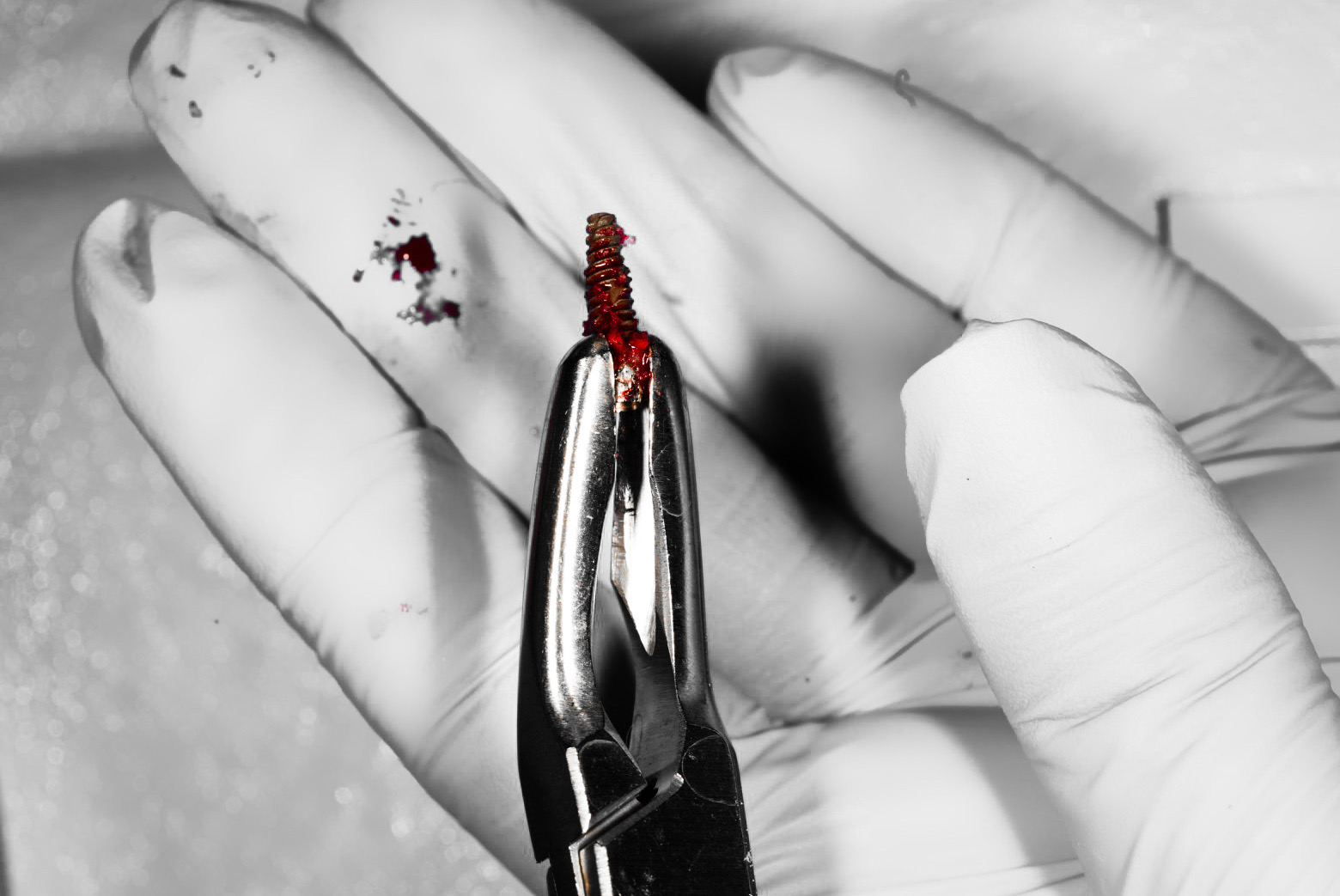
In my experience, integrated implants can definitely make a full-arch case less enjoyable…but not necessarily significantly more difficult. The increased stress in these cases often relates to the increase in manual labor required to remove the integrated implants. This process simply takes longer than removing a tooth.
That being said, integrated implant cases (barring some extremes, of course) can most often be performed with surgical outcomes similar to dentate cases.
When it comes to full-arch patients presenting with integrated implants, there are three primary options the surgeon must consider.
3 Primary Options for Existing Integrated Implants
1. Retain the integrated implant/s and use them in the planned full-arch prosthetic.
While this may sound like the “clear winner”, the primary difficulty in successfully using this option is that most of the time the reduction required for the full-arch prosthetic will necessitate bone removal below the existing implant/alveolar crest, thereby rendering that implant unusable.
However, once in a blue moon, a case may present with an implant at an alveolar site that had some degree of bone loss prior to implant placement. In these rare cases, the integrated implant may be below the planned reduction level and therefore usable in the full-arch prosthetic.
The second reason this option can be difficult is that using the implant requires knowledge of which brand of implant was placed in the first place. Knowing the type of implant is necessary in order to be able to provide an abutment that will be compatible not only with that implant but also with your full-arch surgery case. Sometimes this is quite doable, and other times it can be extremely difficult in patients who have had their implants placed elsewhere many, many years ago.
2. Bury the Implant
The second option the full-arch surgeon has at their disposal to deal with integrated implants is to simply bury the implant. Sometimes, this is the easiest option and involves the least surgical risk.
A cover screw is placed on the implant, and the implant is left in place. No bone removal or bone trauma is created, and the full-arch surgery is simply planned around the implant.
The purpose of this is to avoid the bone destruction created during implant removal. The challenge is that you need enough real estate adjacent to the integrated implant so that you can effectively work around it while leaving the implant buried in place.
Furthermore, as mentioned in the first option above, this assumes the implant is below the level of reduction. If the level of reduction required for the arch goes below the existing implant, then it is typically not possible to simply leave the implant buried. In this scenario, a portion of the implant would be uncovered following reduction and would likely create a soft tissue dehiscence or be in the way of the planned prosthetic.
That being said, there are cases where, for whatever reason, the implant has been placed at a level lower than the planned bone reduction. And sometimes simply leaving that implant alone is the easiest option. This is more common in second or first molar implants that are anatomically more posterior in the arch, where reduction requirements are less.
3. Remove the Integrated Implant
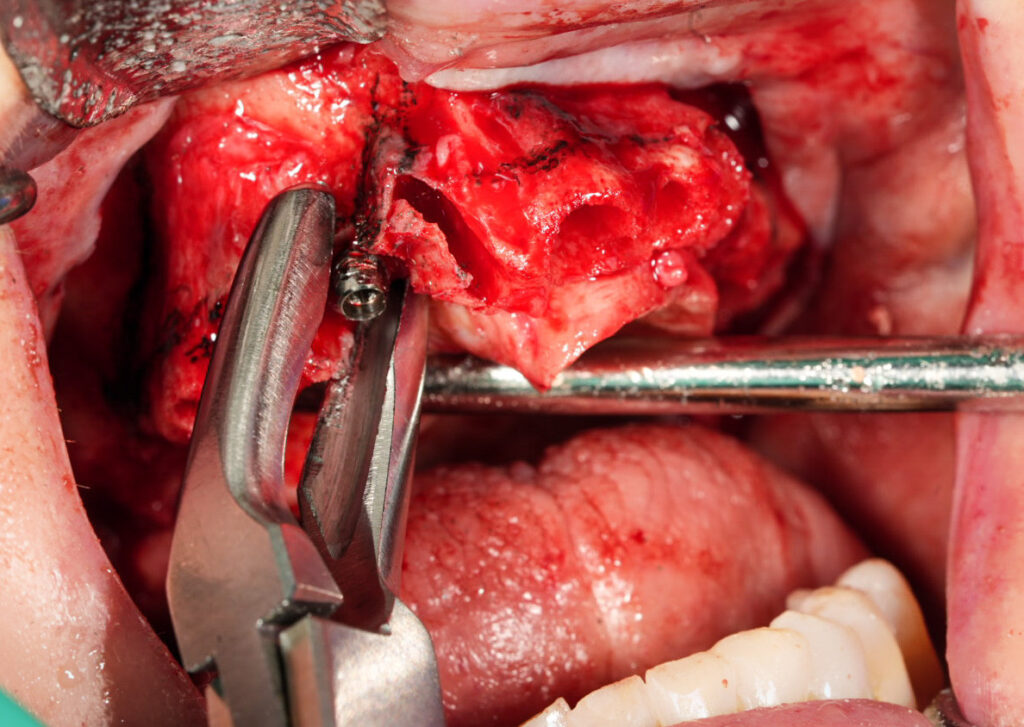
Removing the integrated implant is the most commonly required outcome for successful full-arch surgery. Again, this is because bone reduction typically needs to be taken to a level below the existing implant, thereby compromising the existing integrated implant.
Furthermore, it’s often necessary to use the surrounding real estate for your full-arch surgery. As a result, this makes an option like burying the implant often difficult to utilize (although there are times when burying is the better option).
I would like to note that while implant removal is the option I use most frequently, there are a few times when I tread extremely cautiously and/or avoid removing the implant(s), even if that means not moving forward with the case.
Cases I treat with caution:
- Implants with significant extension into the sinus or the nasal cavity. These are treatable, but you will need to be prepared to manage the oral-antral and/or oral-nasal communication.
Cases I avoid:
- Implants with extension through the inferior alveolar nerve canal in patients who do not have complete anesthesia. I worry that manipulation of the site would worsen what sensation these patients do have left.
- Implants with extension into or through the inferior border. I have seen cases that result in osteomyelitis and jaw fractures with these types of implants, and these should be handled with extreme caution or not at all.
In planning a full-arch surgery case around integrated implants, the full-arch surgeon has the most success when viewing those implants as teeth. In reality, the planning of the case should be no different than it would be if the patient were dentate in those areas.
Far too often, I find that full-arch surgeons create such fear and worry over integrated implants that patients end up getting quad zygomas or transnasal implants or other significant remote anchorage solutions when in reality, the implants could have just simply been removed with a 702 drill, and a typical four-implant full-arch case could have been completed in routine fashion.
Sure, there are always one-off cases with unusual circumstances. However, the typical patient with two, three, or four integrated implants should not significantly alter case planning.
Remember that in these cases, bone reduction is our friend. Even with the bone removal required to remove an integrated implant, following reduction, the remaining implant removal site is simply worked around like a socket.
My challenge to you is to attempt to view existing integrated implants as teeth, when treatment planning full-arch surgery. Sure, difficult teeth to remove, but teeth nonetheless. Remove them as minimally invasively as possible, but often simply remove them as you would a tooth. Ultimately, plan the case as you would a dentate arch.
Here’s to not overcomplicating the simple things.
P.S. Next week’s article will highlight techniques for implant removal.